
LinkedIn Tips: What Actually Works (and What Doesn't)
 Bas Smeets9 min read
The LinkedIn tips worth following come down to three things: a profile that makes the right person think "that's for me," content that says something honest, and enough consistency that people start to recognize you. The rest is noise.
There are thousands of LinkedIn tips circulating online. Most of them are micro-optimizations for an audience that does not exist yet, or advice so generic it could apply to anyone selling anything. The tips that actually work share a common thread: they make you more specific, not more polished.
What LinkedIn tips actually make a difference?
The tips that move things are almost never the ones that go viral in marketing circles. They are about saying the thing your ideal client is thinking but has not heard anyone say plainly. They are about making your profile legible to one specific person rather than impressive to everyone.
Start there. Most LinkedIn advice skips this and goes straight to tactics. Tactics on a weak foundation produce weak results.
What are the most important LinkedIn profile tips for coaches?
Your profile is not a resume. That is still the most ignored reframe in all of LinkedIn advice. A resume lists what you have done. A LinkedIn profile, used well, makes a specific person in a specific situation think: "This person understands my problem." Those are different documents with different jobs to do.
Headline. Not your job title. Not a list of certifications. A sentence that speaks to the specific person you help and the outcome you help them reach. "I help mid-career professionals figure out what they actually want after doing everything right" will outperform "Career Coach | ICF Certified | 15 Years Experience" with the right audience, every time.
About section. Most coaches write about themselves here. The about section that converts starts with the client's situation. "You are good at your job. Maybe great. And still, Sunday evenings feel heavy." That is more disarming than any credential list. Then explain what you do and why. End with a clear invitation.
Featured section. The most underused section on most coaches' profiles. Put something here that lets an interested visitor take a next step: a testimonial, a booking link, a lead magnet, an article that represents your thinking at its best. An empty featured section is a missed conversion.
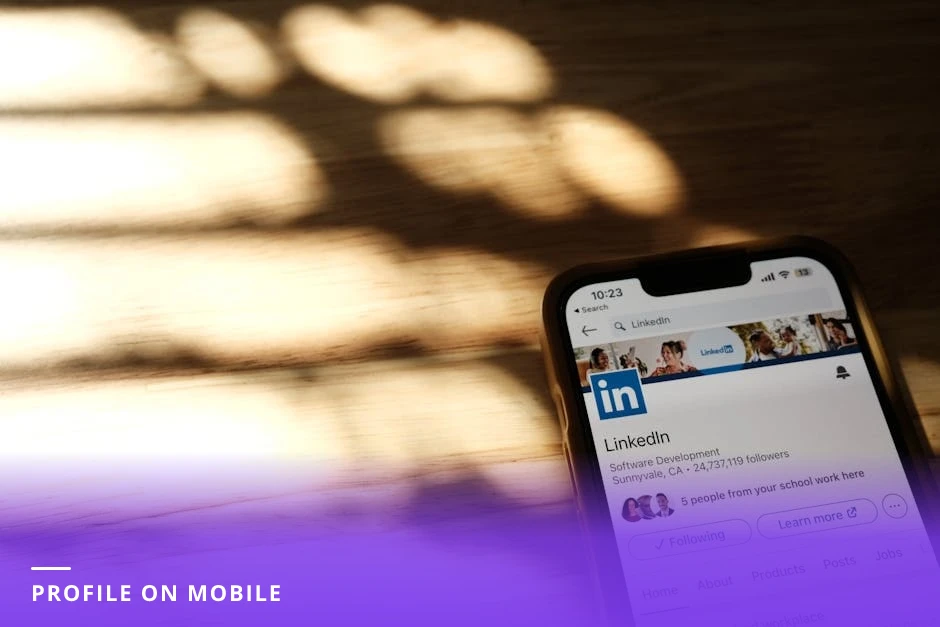
Check your profile from mobile
Most LinkedIn profile views happen on mobile. Open your profile on your phone and read the first three lines visible before "see more." That is what most visitors actually see. If those lines do not make the right person want to keep reading, the rest of your profile does not matter.
The full guide to LinkedIn profile optimization for coaches covers every section in detail if you want to go deeper.
What LinkedIn content tips do coaches actually need?
Most content tips are about format. Post carousels. Use hooks. Write short paragraphs. These are not wrong, but they are downstream of the thing that actually matters: having something real to say.
The content tip that will help you most: write from one specific session observation, not from a topic category. "A client asked me today why she feels guilty taking a day off" is a post. "The importance of work-life balance for professionals" is not a post, it is a filing cabinet label.
Specific beats broad every time. Your real observations, written directly, will outperform any template. That said, short paragraphs do help. One idea per paragraph. A line break between each one. White space on LinkedIn is not wasted.
In my own experience and that from the coaches in my career coaching business, personal stories combined with insights from specific coaching sessions do really well. I try to write about something that happened in my life, for example my recent trip to Tenerife. I then use that experience, like the feeling of adventure, and tie it to a similar feeling a client recently had in a session. For example when something felt new, exciting, but also scary to them.
LinkedIn post frameworks for coaches gives you structures to work inside once you have the core habit of writing from real observations.
What LinkedIn tips help you get more reach?
Reach on LinkedIn comes from two places: the algorithm and your network. Both respond to the same thing — genuine engagement.
The algorithm favors posts that get engagement fast. The first line of your post matters more than anything else. Three things that consistently improve that first line:
A specific detail ("After 200 career coaching sessions this year, I have noticed a pattern...")
A tension or contradiction ("The advice that gets passed around about niching down is backwards")
A question that is actually curious, not rhetorical ("Why do experienced coaches post less than new ones? I have a theory.")
Beyond the algorithm: coaches who comment thoughtfully on other people's posts show up in feeds they would never reach through their own posts alone. Ten genuine comments a week, on posts by people your ideal clients also follow, will grow your audience faster than most tactics.
Reply to the first comment fast
LinkedIn shows comment replies in the feed. If you reply to the first comment on your post quickly, that reply shows up as a notification for everyone who engaged. It is a second exposure for free. Most coaches miss this completely.
What LinkedIn engagement tips work in practice?
Engagement is not just likes. The engagement that builds a practice is comments, conversations that start from those comments, and DMs from someone who connected with a post you wrote.
One practical tip: treat your comment section as part of the post. Write something that opens a question, then answer part of it in the first comment yourself. It makes the thread look active, which signals to the algorithm that the post is worth showing more people.
On DMs: do not pitch in the first message. "I noticed your comment about X — that is something I see a lot. What is driving it for you right now?" opens something. "Hi, I help people like you with coaching, here is my calendar link" closes it before it starts.
The full LinkedIn DM strategy for coaches covers the conversation framework if you want the complete playbook.
Which LinkedIn tips should you stop following?
Post every day. Optimize for the algorithm. Use hashtags strategically. Build your personal brand. These are not terrible tips. They are just overweighted relative to what actually moves things.
Posting every day leads most coaches to post badly most days. Three posts a week that say something real will build an audience faster than seven posts of filler.
"Optimizing for the algorithm" has become a way to avoid saying anything interesting. The algorithm rewards engagement. Engagement comes from people connecting with what you write. Write things people connect with. That is the whole optimization.
Hashtags do essentially nothing for reach on LinkedIn since 2023. They do not hurt, but they are not worth thinking about. "Building a personal brand" is a phrase that makes most coaches write like corporate communications. You do not need a brand. You need a clear point of view and the consistency to express it.
The tip that ages best
Every LinkedIn hack has a shelf life. What does not go stale: being specific, being honest, and showing up consistently. Every durable LinkedIn presence is built on those three things. Not tactics.
How do you put LinkedIn tips into practice without burning out?
The coaches who build a real LinkedIn presence over time share one habit: they make it small. Not "I will post three times a week" as an aspiration, but "I will write two sentences after every session about what came up, and turn one of those into a post this week."
Small, sustainable, attached to something you are already doing. That is what sticks.
CoachCraft is built for exactly this. It helps you turn what you already know — your sessions, your observations, your methodology — into LinkedIn content that sounds like you. Try it free at coachcraft.io.
Frequently asked questions
What are the most important LinkedIn tips for coaches?
Profile clarity, content specificity, and consistent engagement. In that order. Fix the profile first so the content you create actually converts when someone visits your page.
How do I get more LinkedIn connections as a coach?
Post content your ideal clients find valuable, engage thoughtfully with posts in your niche, and send personalized connection requests to people you have a genuine reason to connect with. Volume cold-connecting does not build a useful network.
What is the best LinkedIn tip for getting clients?
Write about the specific problems your clients come to you with. When the right person reads it and thinks "that is exactly my situation," they will find a way to reach out. That is the whole mechanism.
How often should I post on LinkedIn as a coach?
Three times a week is the minimum that keeps you visible in the algorithm. Start with what you can sustain consistently, not what sounds impressive. Quality over frequency, every time.
Should I use LinkedIn Premium as a coach?
Probably not unless you need InMail credits for outreach. The content and engagement tools that matter are available in the free version. Most coaches who upgrade do not use the features that justify the cost.
What is the biggest LinkedIn mistake coaches make?
Writing their profile and content for other coaches rather than for their ideal clients. That feedback loop makes content sound insider-y when it should feel accessible to someone who has never worked with a coach before.
How do I know if my LinkedIn strategy is working?
Track profile views and connection requests from people who match your ideal client, not follower count or likes. If people who look like your clients are finding you and reaching out, it is working.
For a complete overview, see our The LinkedIn Content Strategy for Coaches: What Actually Works in 2026.
Create LinkedIn Content That Converts
Join career coaches using CoachCraft to build their LinkedIn presence.
Get Started Free