
LinkedIn Post Ideas That Actually Get Engagement
 Bas Smeets11 min read
The best LinkedIn post ideas come from what you already know: your client sessions, your observations, your opinions. You do not need a content calendar full of generic topics. You need a short list of angles that keep working.
Most coaches looking for LinkedIn post ideas end up in the same place: a listicle of 50 vague prompts that feel nothing like how they actually think. "Share a win." "Ask your audience a question." These are not ideas. They are categories, and vague ones at that.
What actually works is more specific. Below are the post types that consistently get engagement for coaches on LinkedIn, with enough detail that you can use them today.
What kinds of LinkedIn posts get the most engagement?
Before getting into specific ideas, it is worth being clear about what "engagement" means on LinkedIn. Likes are vanity. Comments are signal. Shares mean someone thought your post was worth their reputation.
The posts that get real engagement are almost always posts where a reader thinks: "That is exactly what I was thinking but could not say." Specificity beats breadth every time. A post about one client pattern you keep seeing will outperform a post about "5 things coaches should know about LinkedIn." Every time.
Consistent engagement
The coaches who get consistent engagement are not posting more. They are posting more specifically. One honest observation from one session beats ten generic tips.
The 12 LinkedIn post ideas that actually work for coaches
1. The pattern you keep seeing
You have had some version of the same conversation across dozens of clients. That pattern is a post. Not "many professionals struggle with X" but "the third time a client said this exact thing to me in a month, I started paying attention."
This format works because it signals experience without claiming authority. You are not saying you have all the answers. You are saying you noticed something real. Example angle: the client who has been "about to" update their LinkedIn profile for eight months. What is actually going on there?
2. The reframe
Take something your audience believes and show them a different way to see it. Not to be contrarian, but because you have watched the common framing cause real problems. "Most coaches say X. Here is why that advice fails for a specific type of client." This creates productive disagreement. People share it even when they do not fully agree.
See the full breakdown of post frameworks that work for coaches for more structures like this one.
3. The client question you could not stop thinking about
Someone asked you something in a session that caught you off guard. You gave an answer, but you kept thinking about it afterward. That is a post. "A client asked me something last week that I am still turning over..." opens a post that feels like a real thought in progress, not a polished take. Readers engage with thinking, not just conclusions.
4. The myth you are tired of
What is the thing people keep saying about your coaching niche that is wrong, or at least oversimplified? Say so. Directly. Not "it is complicated" and not "well, it depends." An actual opinion. This is where coaches lose their nerve, and it is also where the most memorable posts come from.
Example:
"Everyone says you need to niche down to get clients. I have watched coaches niche down and get fewer clients. Here is the part nobody tells you." The nuance lives in the body, not the hook.
5. The before and after (without the client)
You do not need to share a client story to write about transformation. Describe the before state and the after state based on patterns you have seen, without identifying anyone. "Six months ago this person was [specific situation]. Today they are [specific outcome]. The shift was not what they expected." The specificity makes it real. The anonymity keeps it ethical.
6. What you got wrong
Something you used to believe as a coach that you no longer believe. This format earns trust faster than any credential you can list in your bio. Coaches who say "I used to approach this completely wrong, and here is what changed my thinking" feel like someone worth following.
7. The specific observation from today
Something you noticed today, or this week, that made you think. Not a lesson. Not a framework. Just an honest observation with some texture to it. "I had three sessions today and all three clients used the phrase: I just need to figure out what I want. I have been thinking about why that sentence is so hard to finish."
from session to post
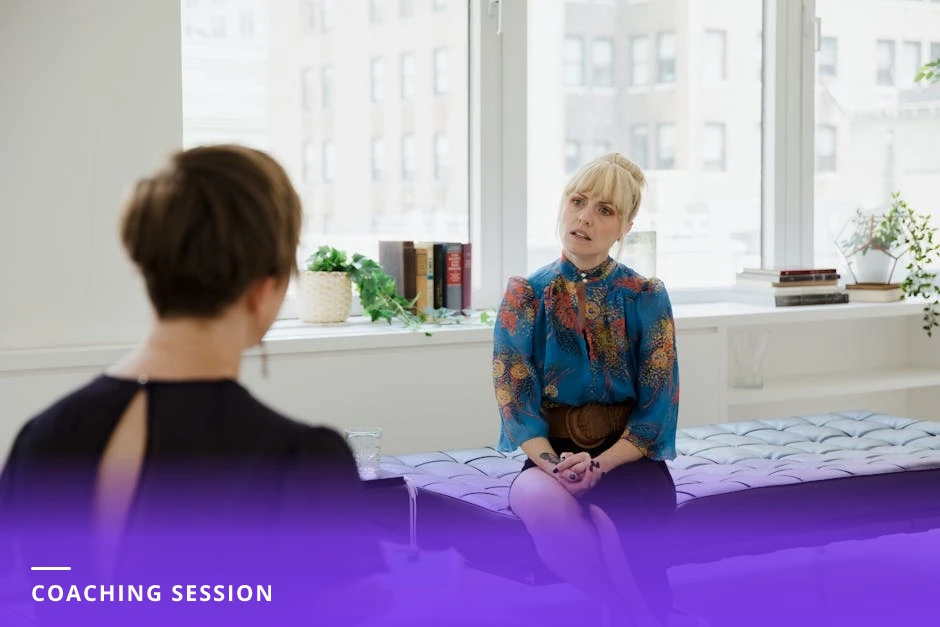
Turning session observations into posts is one of the most sustainable content habits a coach can build. One two-minute note after each session gives you raw material for weeks.
8. The unpopular opinion in your niche
What do most coaches in your space say that you think is wrong, or at least incomplete? Say it clearly. Not aggressively, just directly. This is different from the myth post. That is about correcting client misconceptions. This is about disagreeing with your peers. It takes more nerve and generates more conversation.
9. The question you ask every client
There is probably a question you ask in almost every first session because it reliably opens something up. Share that question and explain why you ask it. This post type shows your methodology without you having to explain your methodology. Readers see how you think, which is what attracts the right clients. Making your coaching methodology visible on LinkedIn is one of the most underused client attraction strategies there is.
10. The LinkedIn tip grounded in your actual experience
A lot of LinkedIn advice exists in the abstract. "Post consistently." "Engage with your network." "Use hooks." You can do better than that because you have real experience watching what actually happens when coaches try to do this. "Here is the LinkedIn advice I gave a coach on my team last month, and why it is different from what you usually read" is a post. Specific, grounded, and it has you in it.
11. The thing nobody talks about in your niche
Every coaching niche has an uncomfortable truth the community collectively avoids. Burnout in high-performance coaching. Coaches who stay stuck themselves. The financial reality of building a practice. Whatever it is in your world, there is an audience for the person willing to say it plainly.
12. The post that explains what you actually do
Not your services page copy. Not "I help professionals find their passion." The real thing that happens in your sessions. What changes. What it looks like when someone is stuck and then is not. Most coaches describe what they offer. Almost none describe what it actually feels like to work with them. That gap is a post.
What are the best LinkedIn post formats for engagement?
Format matters, but less than coaches think. A mediocre idea in a carousel is still a mediocre idea. A sharp observation as a plain text post will outperform it every time.
Text posts — Best for opinions, observations, stories. Highest reach when the hook is strong.
Carousels — Best for frameworks, step-by-step processes, before/after comparisons. Higher save rate than text posts. How to build LinkedIn carousels that actually get read.
Short video — Best for building familiarity fast. Less competition because the bar to entry keeps most coaches out.
Polls — Good for research and reach, not for positioning. Do not overuse them.
LinkedIn articles — Useful for SEO and long-form thinking, but lower feed reach than regular posts.
The coaches who get consistent engagement pick one or two formats and get good at them, rather than rotating through all five.

How do you find LinkedIn post ideas when you are stuck?
The blank screen problem is real. Here is the shortest path out of it. Open your notes app and finish one of these sentences without editing yourself:
"The thing I keep saying to clients this month is..."
"The question I get asked most often is..."
"The advice I used to give that I would now change is..."
"Something I noticed this week that surprised me..."
"The mistake I see coaches in my niche make is..."
Pick the answer that feels most alive to you. That is your post. The idea was already there, you just needed a structure to surface it.
write down ideas
Keep a running post ideas note on your phone. Two sentences after a session, before you open your next tab. After a month you will have more ideas than you can use.
How often should you post to get engagement on LinkedIn?
Consistency matters more than frequency. Three posts a week, every week, will build an audience faster than seven posts one week and nothing for three weeks after. The minimum that keeps you visible in the algorithm is roughly three times a week. Beyond five posts a week, you are likely sacrificing quality for volume, and quality is what gets engagement. How often to post on LinkedIn covers this in more detail, but the short answer is: start with what you can actually sustain.
What makes a LinkedIn post actually get comments?
Comments come from posts that make someone feel seen, or posts that make someone disagree enough to say something. Posts that end with a genuine question get more comments, but only if the question is real. "What do you think?" at the end of a generic post gets nothing. "Has anyone else seen this pattern?" at the end of a specific observation gets responses from people who have.
Reply to every comment in the first hour. LinkedIn treats comment velocity as a signal. You get more reach when comments come in fast, and fast comments come in when you respond and keep the conversation going.
How CoachCraft helps coaches never run out of post ideas
The ideas above work. The harder problem is execution: finding the time to turn a session observation into a finished post when you have clients back to back and a practice to run.
CoachCraft is built specifically for coaches. It understands coaching methodology, speaks your language, and helps you turn what you already know into content that sounds like you, not like a content mill.
Try it free at coachcraft.io.
Frequently asked questions
What should a coach post on LinkedIn?
Post about what you observe in your sessions, the patterns you see across clients, opinions you hold about your niche, and questions that make people think. Specific and personal always outperforms generic and polished.
How do I come up with LinkedIn content ideas as a coach?
Start with your sessions. After each one, write two sentences about what came up. Over time that becomes a content library. The ideas are already in your work, they just need to be captured before they disappear.
What type of LinkedIn posts get the most engagement?
Posts with a clear opinion, a specific observation, or a reframe of something people believe. Vague inspiration gets likes. Specific, honest observations get comments and shares.
How long should a LinkedIn post be?
Long enough to make your point, short enough that every sentence earns its place. Most high-performing posts are 150 to 300 words. Longer posts work when the story genuinely needs the space.
Should coaches use LinkedIn post templates?
Templates are useful as a starting point, not a finish line. Use a framework to get started, then rewrite it until it sounds like you. If it still sounds like a template when you are done, rewrite it again.
Why are my LinkedIn posts not getting engagement?
Usually one of three things: the hook does not make someone want to keep reading, the content is too generic to create a reaction, or you are not posting consistently enough to build an audience. Start with the hook.
How do I write LinkedIn posts that sound like me?
Write a rough draft fast, without editing. Then read it aloud. Anywhere it sounds stiff or formal, rewrite it the way you would actually say it to a client. That gap between written and spoken is where the voice lives.
For a complete overview, see our The LinkedIn Content Strategy for Coaches: What Actually Works in 2026.
Create LinkedIn Content That Converts
Join career coaches using CoachCraft to build their LinkedIn presence.
Get Started Free